
Hydraulic Overload: Why Your Drains Back Up When It Rains (and How NRVs Can Stop It)
Understanding a Growing Drainage Problem in Mid Sussex
24/7
Emergency Callouts
10+
years Experience
250+
Recommended
5/5
Rated On Google


Over the last few years, heavy rainfall has become far more common across Sussex. Storms that used to appear once or twice a season now seem to roll through every few weeks, leaving homes and gardens struggling to cope. For drainage engineers, this shift is impossible to ignore — call-outs for flooding, backflow, and overloading are on the rise in towns like Hurstpierpoint, Burgess Hill, Haywards Heath, and Hassocks.
The term “hydraulic overload” might sound overly technical, but it describes something homeowners see all too often: drains and sewers filling faster than they can empty. The result? Dirty water bubbling up through gullies, manholes, or even toilets.
In this guide, we’ll break down exactly what hydraulic overload is, why it happens, and how simple measures like fitting non-return valves (NRVs) can protect your property from backflow during heavy rain — without overcomplicating things.
What Is Hydraulic Overload?
Put simply, hydraulic overload happens when more water enters a drainage system than it can physically handle.
In normal conditions, household waste and surface water flow through underground pipes into the public sewer. But during very heavy rain — especially when the ground is already saturated — that system can become overwhelmed. When there’s nowhere for the water to go, it forces its way back through the easiest exit point.
That could be a gully, a manhole cover, or even an indoor toilet trap. The pressure can push up debris, silt, and sewage, leading to unpleasant flooding both inside and outside your home.
In Mid Sussex, where clay soils and older combined sewers are common, this problem is made worse by local conditions. The heavy clay doesn’t absorb much rainfall, so more water runs off into the sewers — often all at once.
Common Causes of Hydraulic Overload
Hydraulic overload doesn’t always have a single cause. Often, it’s a combination of issues building up over time. Here are the main culprits:
1. Heavy or Sustained Rainfall
When rain falls faster than drains can discharge, the system backs up. Even modern stormwater systems have their limits — they’re designed for a “1 in 30 year” storm, but that standard is being exceeded more often.
2. Saturated Ground
In areas like Haywards Heath and Burgess Hill, clay subsoil can hold water like a sponge. Once the ground is saturated, every new drop runs off directly into the drainage system instead of soaking away.
3. Misconnections or Shared Systems
Older homes in Sussex often have combined drains — carrying both rainwater and foul water in the same pipe. When everyone’s roof water enters the same system, overload is inevitable during heavy storms.
4. Blockages or Restrictions
Silt, roots, or broken sections can reduce a pipe’s internal diameter. Even a small restriction can dramatically cut flow when pressure builds.
5. Public Sewer Overload
Sometimes, the cause lies beyond your property. When the main sewer itself surcharges, there’s little a homeowner can do without a one-way barrier in place.
We're Here to Help!
Real Case Study: Backflow in Hurstpierpoint
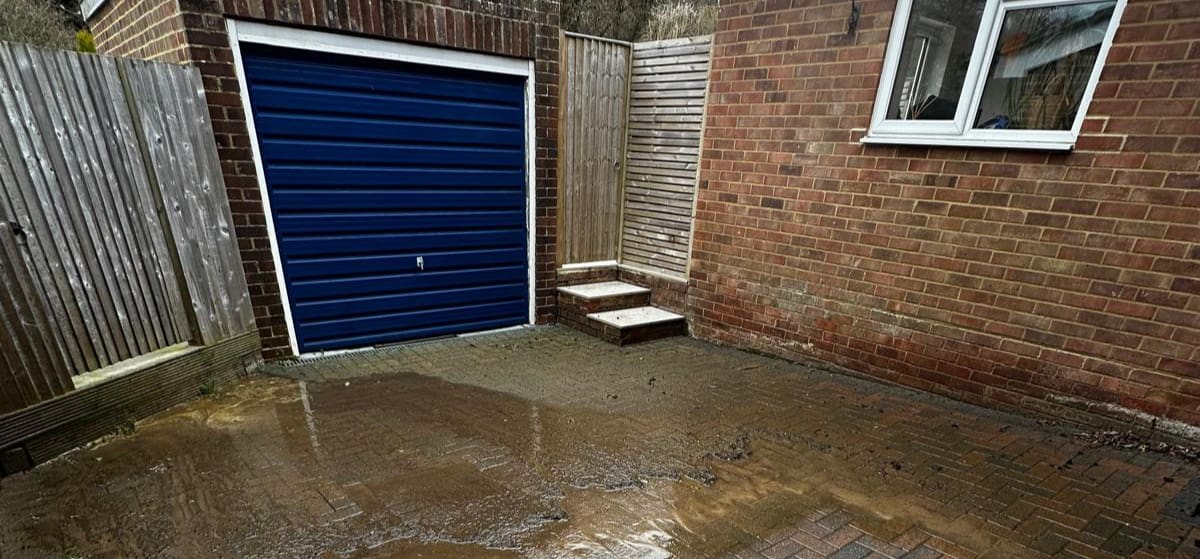
Earlier this year, we attended a property in Hurstpierpoint suffering from repeated flooding whenever it rained heavily. The homeowner described water “boiling up” from the open gullies near the garage.
During inspection, we discovered the tell-tale signs of backflow from the public sewer. Silt, grit, and other solids had been forced back into the private system — coating the pipes and causing repeated blockages.
Our first step was to clear the system completely. Using a combination of high-pressure water jetting and vacuum extraction, we removed the sludge, flushed the lines, and restored correct flow.
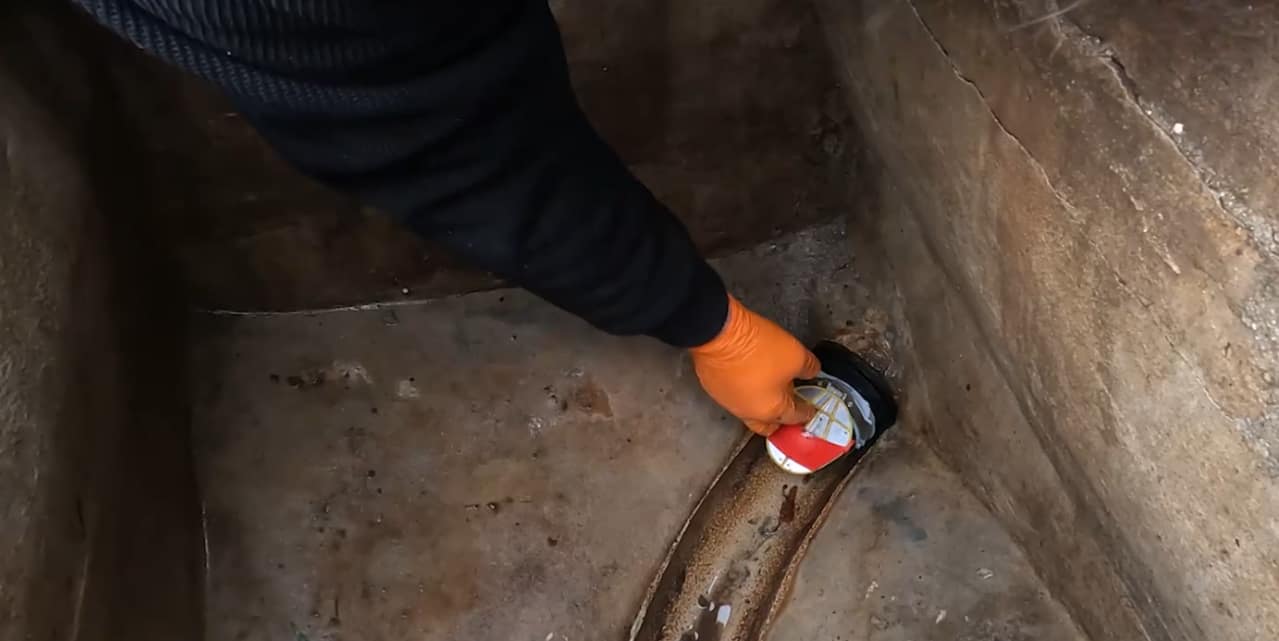
Next, to protect against future incidents, we fitted two NRV (non-return valve) units into the branches leading to the interceptor chamber — the last chamber on the property before the sewer connection.
The results were immediate. When heavy rain returned a week later, the NRVs prevented any water from pushing back onto the property. The customer reported the gullies stayed dry for the first time in years.
However, as we explained at the time, NRVs don’t come without a small trade-off.
How Non-Return Valves (NRVs) Work
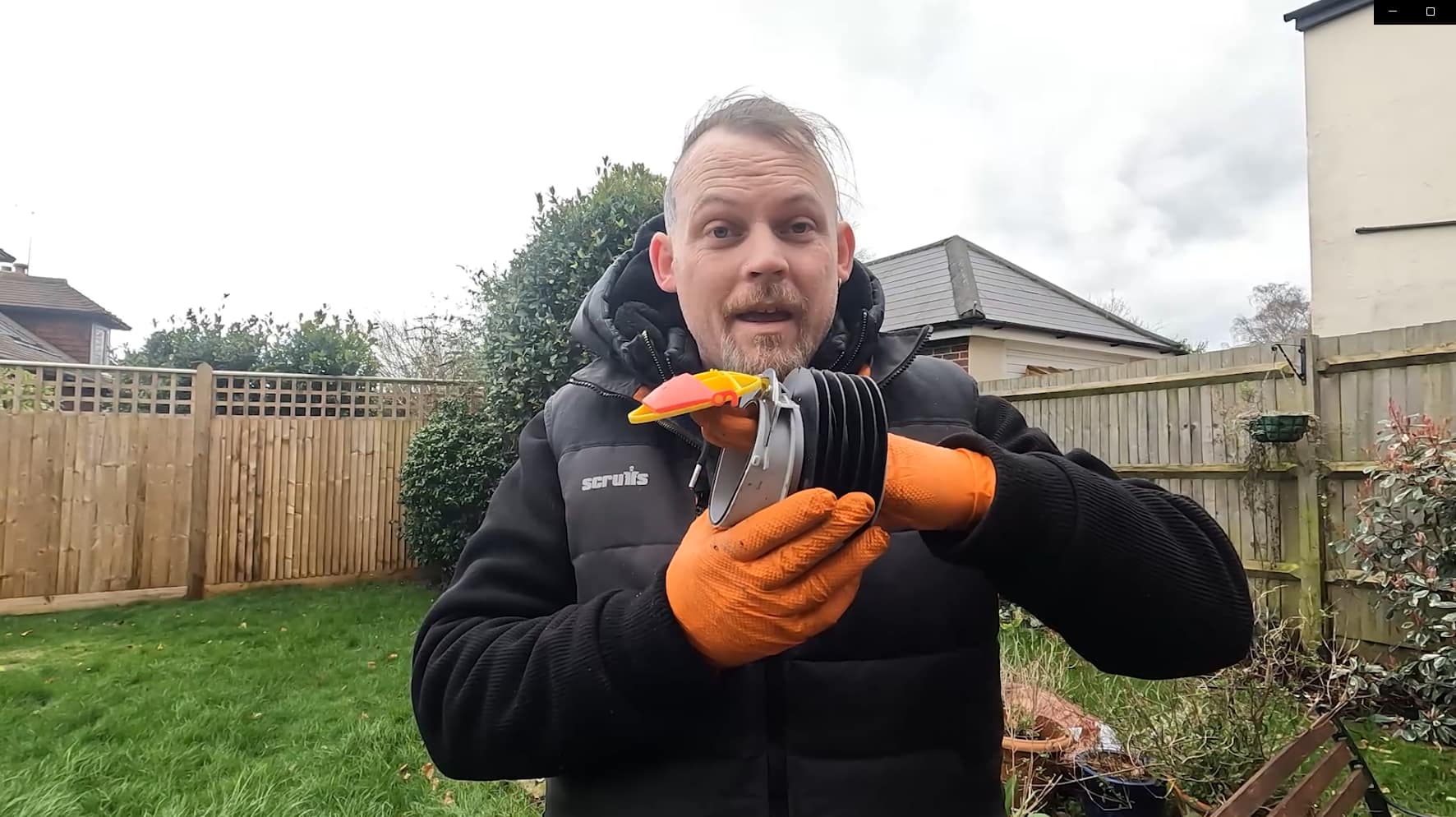
An NRV, or non-return valve, is a simple but incredibly effective device. It allows water to flow out of a property but automatically closes if water tries to flow back in.
The valve works on gravity and pressure — a hinged flap opens freely under normal conditions but seals tight if reverse pressure occurs.
When installed correctly, NRVs act as a vital line of defence during heavy rainfall or sewer surcharge events. They stop contaminated water from re-entering your home, protecting against damage and contamination.
In most domestic setups, we fit them:
-
Inside inspection chambers before the final outlet to the public sewer
-
On branch lines from kitchens, bathrooms, or gullies that sit below road level
Same-Day Drain Clearing and Inspection in Burgess Hill
If your drain is backing up on Keymer Road, Fairbridge Way, or anywhere across Burgess Hill and Mid Sussex, we’re ready to help.
📞 Call 07754 994481 — Contact Us
All work is carried out professionally, tidily, and at a fair, fixed rate.
Benefits of Fitting NRVs
✅ Stops backflow immediately – Protects against raw sewage or rainwater pushing back into private drains.
✅ Prevents silt and debris return – Reduces blockages caused by sediment washing back.
✅ Protects property foundations – Stops repeated wetting and drying around drain runs.
✅ Reduces flood damage risk – Especially valuable for basements, garages, and low-lying gardens.
✅ Peace of mind – Knowing you’ve got a simple, mechanical defence that works automatically.
The Trade-Off: What Happens During Backflow
It’s important to understand one limitation:
When an NRV closes during hydraulic overload, it blocks both directions.
That means while the valve protects you from the main sewer surcharging, your property’s drains can’t discharge waste water until the main system pressure drops.
In practice, this might cause slow draining or even temporary backing-up inside the house if taps or toilets are used during the storm.
For most homeowners, though, that’s an acceptable short-term inconvenience compared to raw sewage flooding the garden or garage. Once the rain eases and the pressure subsides, the valves reopen automatically and everything flows as normal.
Understanding the Sussex Context
The combination of clay soil, hilly terrain, and mixed-age housing stock across Mid Sussex creates unique drainage challenges.
In Burgess Hill, older interceptors and clay pipework are still common. In Haywards Heath, newer developments often tie into existing combined sewers. Meanwhile, in Hassocks and Hurstpierpoint, runoff from nearby fields and high water tables can push surface systems to their limits.
That’s why we always take a tailored approach. Installing an NRV is not a one-size-fits-all fix — it’s about assessing where the risk lies, whether that’s in the property layout, elevation, or sewer position.
What To Do If Your Drains Flood During Heavy Rain
-
Stay clear of flooded gullies or manholes. The water may contain sewage.
-
Avoid flushing toilets or draining baths until the pressure subsides.
-
Call a professional drainage engineer to inspect once it’s safe — not just to clear the blockage, but to find out why it happened.
-
Ask about NRV installation. It’s a straightforward, cost-effective way to prevent a repeat incident.
Simple Maintenance Tips
Even if you’re not in a high-risk area, keeping your system in good condition helps avoid overload problems.
-
Keep gullies clear of leaves and debris.
-
Run water regularly through little-used traps (baths, utility rooms) to maintain the seal.
-
Have your drains inspected annually, especially if you’ve had issues before.
-
Avoid flushing wipes or fats – they restrict flow when you need it most.
Frequently Asked Questions
Do NRVs need maintenance?
Yes. Like any moving part, NRVs benefit from periodic inspection. Once or twice a year, lift the chamber lid and check that the flap moves freely and seals correctly.
Can I fit an NRV myself?
We don’t recommend it. Correct fitting depends on alignment, fall, and chamber size. A poorly fitted NRV can restrict flow even under normal conditions.
Do NRVs stop flooding completely?
They prevent backflow but won’t fix other causes like poor soakaways or high groundwater. Think of them as a strong first defence, not a total cure.
Can NRVs be fitted in any chamber?
Usually yes, though the chamber needs enough depth and access to fit the valve securely. Some older brick chambers may require modification first.
What does an NRV installation cost?
Costs vary depending on access, chamber depth, and pipe size. In many Sussex homes, prices start from around £120–£180 per valve when fitted alongside other works.
Need Advice About Backflow or NRVs?
If you’ve experienced flooding after heavy rain or you suspect your system may be at risk, give us a call.
📞 07754 994481 — Same-day advice, honest quotes, and no call-out fees during working hours.
Need a Hand with Your Drains?
Whether you’ve got a slow gurgle, a strange smell, or just want peace of mind – we’re here to help. At Black Swan Drainage, we keep things simple, honest and fairly priced. No nonsense, no surprises.
Give us a bell today or pop us a message – we’ll sort it, no stress.
Get in TouchOur Services
How Can We Help You?

Blocked Drains
Unblocking drains for commercial and domestic customers, 24 hours a day, 365 days a year! Call now to book in.

CCTV Drain Surveys
CCTV surveys to detect drain problems or build over & pre-purchase surveys for home buyers around Cuckfield.

Septic Tanks
Liquid waste removal or cesspit and septic tank emptying for domestic and commercial premises.

Gutter Cleaning
Our team specialises in maintaining gutter flow and preventing future blockages.

Root Cutting & Removal
For root blockages, our root cutting and removal services are essential for effective resolution.

Toilet & Sink Repairs
Our team excels in repairing and servicing toilets and sinks, restoring them to their original condition.
Book Online
Get A Free Consultation & Estimate For Your Plumbing Needs
For 24/7 Emergencies Call
Complete the simple form below to receive your free consultation and estimate.